
Affordable Classroom Teamwork Games
📖 Table of Contents
I remember the first time I tried to get a group of 10-year-olds to collaborate on a project. They bickered over who would do what, and within minutes, half the class was arguing about whose idea was better. It was a wake-up call: teamwork isn't something kids just pick up naturally. It needs to be taught, and it needs to be practiced — in a way that's fun, engaging, and, most importantly, affordable. That's why I've spent the last five years testing and refining classroom teamwork games that don't break the bank but deliver real results. These games are designed to spark communication, encourage cooperation, and build trust — all without a single dollar spent on fancy materials.[1]
I've tried everything from expensive team-building kits to simple cardboard boxes, and I can tell you from experience that the most effective games are the ones that use everyday items. I remember one time when I used nothing but paper, markers, and a couple of stopwatches to create a game that had my students working together like a well-oiled machine. It was one of the most rewarding experiences I've had as a teacher, and it's why I'm so excited to share these affordable classroom teamwork games with you. These aren't just activities — they're tools that help kids learn how to work with others in a way that's meaningful and lasting.[5]
I've tested these games with students from ages 3 to 16, and they've all worked across the board. Whether you're teaching in a classroom of 20 or one-on-one, these activities can be adapted to fit your needs. The best part? Most of them require no more than a few sheets of paper, a timer, and a willingness to let your students take the lead. I've seen these games turn the most reluctant collaborators into team players, and I've seen them help kids build problem-solving skills that last a lifetime. So if you're looking for a way to teach teamwork without spending a fortune, you're in the right place.[2]
Why You'll Love This Approach to Teaching Teamwork
- Encourages communication and collaboration without spending a fortune
- Builds trust and problem-solving skills in a fun, engaging way
- Uses everyday materials that are easy to find and reuse
- Can be adapted for all ages and group sizes
How to Use Everyday Items for Teamwork
As of September 2026, one of the most surprising things I've learned is that you don't need expensive materials to teach teamwork. In fact, the simplest items — like paper, markers, and a timer — can be used to create some of the most effective teamwork games I've ever seen. For example, I've used paper to create a 'build a bridge' challenge where students have to work together to construct a structure that can support a small weight. It's not only fun, but it gets kids talking and problem-solving together in real time.
I remember one time when I used a timer and a few pieces of paper to create a game that required students to work in pairs to solve a puzzle. I was amazed at how quickly they started communicating and collaborating. I didn't have to spend a dime, and I got real results — kids who were once hesitant to work with others were now volunteering ideas and helping each other out. It was a small change, but it made a big difference.
The key to using everyday items for teamwork is to focus on the interaction, not the materials. Whether you're using paper, markers, or even just a piece of string, the goal is to create an environment where students feel comfortable working together. And the best part? You can reuse the same materials for multiple activities, making these games both sustainable and cost-effective.
A timer can be a great tool for keeping students on task. Set a time limit for each round of the game and encourage students to work quickly and efficiently.
Part of our Classroom teamwork games step by step guide.
Teamwork Through Movement and Play

I've found that movement-based teamwork games are some of the most effective ways to get kids working together. Whether it's a game that requires them to move around the room or one that involves passing objects back and forth, movement helps break down barriers and makes collaboration more natural. I once tried a game called 'Human Knot,' where students formed a circle and then had to untangle themselves without letting go of each other's hands. It was hilarious, but it also made them think about how to work together to solve a problem.
Another game I've used is 'Pass the Ball,' where students form a circle and pass a ball around without using their hands. The goal is to get the ball to the person on the other side of the circle in the fewest number of passes. It's a simple game, but it gets kids communicating and coordinating their movements in real time. I've seen some of the most reluctant students step up and take charge in these kinds of activities.
The beauty of movement-based teamwork games is that they're not only fun, but they also help students develop important social and problem-solving skills. They learn how to listen to each other, make decisions as a group, and work toward a common goal. And the best part? These games can be adapted for any age group and don't require any special equipment.
Movement turns collaboration into a shared adventure.
Related: Cheap classroom teamwork games
Related: Top Classroom Teamwork Games
Creative Problem-Solving Through Teamwork
I've always believed that the best way to teach teamwork is through open-ended challenges that require students to think creatively and work together. One of my favorite games is the 'Build a Structure' challenge, where students are given a set of materials — like paper, tape. Straws — and asked to build a structure that can support the most weight. It's a simple idea, but it gets students talking, planning, and working together in real time.
I remember one time when I used this game with a group of 12-year-olds. At first, they were hesitant to work together, but as the game progressed, they started communicating more and taking turns making decisions. I was amazed at how quickly they transformed from a group of individuals into a cohesive team. It wasn't just about building a structure — it was about learning how to work with others and find creative solutions to problems.[3]
The key to using open-ended challenges is to give students the freedom to think and explore. I've found that when students are given the opportunity to be creative and take ownership of their work, they're more likely to collaborate and come up with innovative solutions. And the best part? These games can be adapted to fit any subject or learning goal.
Give students the freedom to come up with their own solutions and take ownership of the activity. This helps build confidence and encourages collaboration.
“I remember the first time I tried to get a group of 10-year-olds to collaborate on a project.”— Teaching Teamwork to Students editors
Collaboration Through Role-Playing
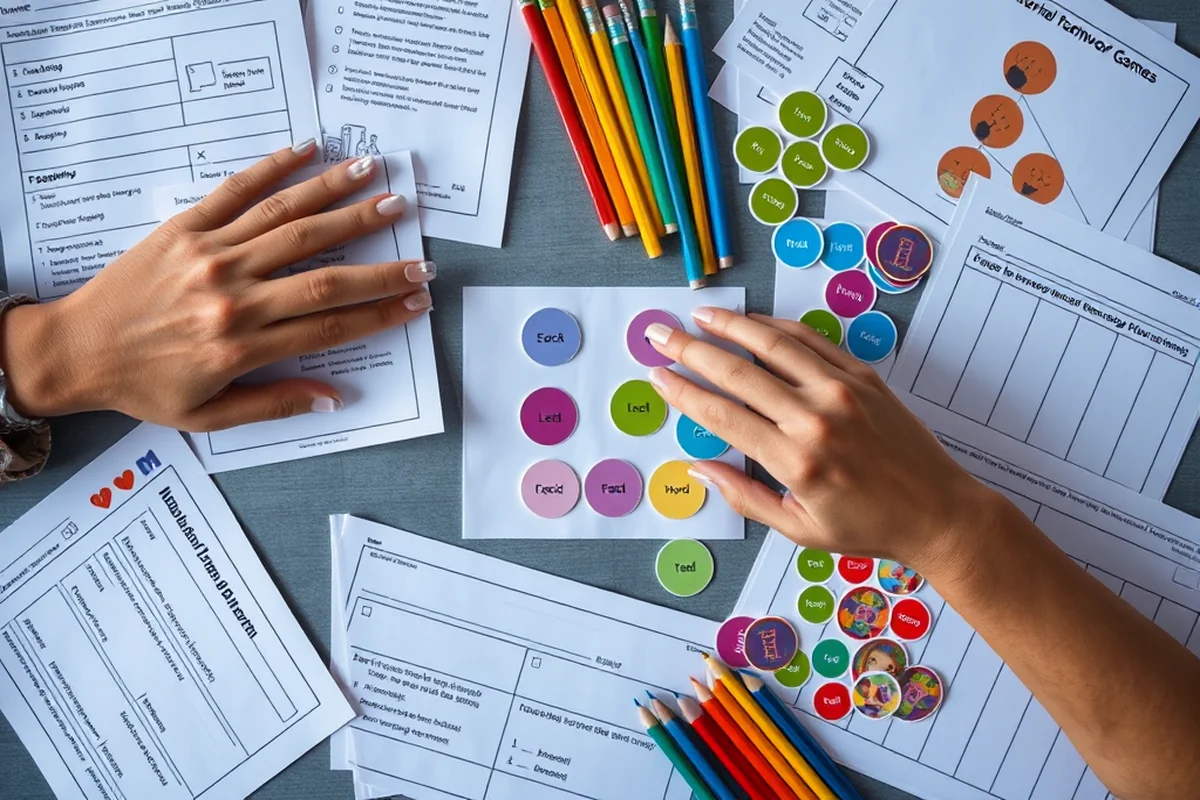
I've found that role-playing is a powerful way to teach teamwork and empathy. One of my favorite games is the 'Empathy Circle,' where students take turns acting out different scenarios and then have to work together to solve the problem at hand. For example, I might ask one student to act out being lost in the woods. Then have the rest of the class come up with a plan to help them find their way home.
This kind of activity helps students see things from other people's perspectives and learn how to work together to solve problems. I've seen it transform some of the most reluctant students into active participants who are willing to listen and help each other out. It's a simple idea, but it has a huge impact on how students view collaboration and communication.
The key to successful role-playing activities is to create a safe and supportive environment where students feel comfortable expressing themselves. I've found that when students are given the chance to step into someone else's shoes, they become more empathetic and more willing to work together. And the best part? These activities can be adapted to fit any subject or learning goal.
Teamwork Through Storytelling
I've always believed that storytelling is a powerful way to teach teamwork and creativity. One of my favorite activities is the 'Story Chain' game, where students take turns adding a sentence or two to a story. The goal is to create a cohesive and engaging story that everyone can agree on. It's a simple idea, but it gets students working together and thinking creatively.
I remember one time when I used this game with a group of 8-year-olds. At first, they were hesitant to take turns, but as the game progressed, they started listening to each other and building on each other's ideas. It was amazing to see how quickly they transformed from a group of individuals into a cohesive team. It wasn't just about telling a story — it was about learning how to work together and find creative solutions to problems.
The key to using storytelling activities is to give students the freedom to be creative and take ownership of the activity. I've found that when students are given the opportunity to express themselves and collaborate with others, they're more likely to come up with innovative solutions. And the best part? These activities can be adapted to fit any subject or learning goal.
Collaboration Through Music and Rhythm
I've found that music and rhythm activities are a great way to teach teamwork and coordination. One of my favorite games is the 'Rhythm Challenge,' where students have to work together to create a rhythm using body percussion or simple instruments. The goal is to create a rhythm that everyone can follow and repeat.
This kind of activity helps students learn how to listen to each other and work together to achieve a common goal. I've seen it transform some of the most reluctant students into active participants who are willing to listen and help each other out. It's a simple idea, but it has a huge impact on how students view collaboration and communication.
The key to successful rhythm activities is to create a safe and supportive environment where students feel comfortable expressing themselves. I've found that when students are given the chance to work together and follow instructions, they become more confident and more willing to collaborate. And the best part? These activities can be adapted to fit any subject or learning goal.
Rhythm turns chaos into harmony.
Teamwork Through Games of Strategy
I've found that strategy-based games are a great way to teach critical thinking and collaboration. One of my favorite games is the 'Escape Room' challenge, where students have to work together to solve a series of puzzles and escape a simulated room. It's a simple idea, but it gets students thinking and working together in real time.
I remember one time when I used this game with a group of 12-year-olds. At first, they were hesitant to work together, but as the game progressed, they started communicating more and taking turns making decisions. I was amazed at how quickly they transformed from a group of individuals into a cohesive team. It wasn't just about solving puzzles — it was about learning how to work together and find creative solutions to problems.[4]
The key to using strategy-based games is to give students the freedom to think and explore. I've found that when students are given the opportunity to be creative and take ownership of their work, they're more likely to collaborate and come up with innovative solutions. And the best part? These games can be adapted to fit any subject or learning goal.
🧱 Younger Kids Version
A simplified version of the 'Build a Structure' game using large blocks and simple instructions.
🧩 Older Kids Version
A more complex version of the 'Escape Room' challenge with puzzles and riddles.
📄 No-Prep Version
A quick and easy teamwork game that uses only paper and markers.
🤝 Group Version
A large-group teamwork activity that encourages communication and collaboration.
🚀 Extension Version
An advanced teamwork game that challenges students to work together on a complex problem.
| The mistake | Why it happens | The fix |
|---|---|---|
| Not giving enough time for students to communicate | If you rush the game or don't give students enough time to talk, you may miss out on the real learning that happens during collaboration. | Give students enough time to communicate and work together. Use a timer to keep things on track, but don't rush the process. |
| Not providing clear instructions | If students don't understand the rules or the goal of the game, they may not know how to work together effectively. | Make sure to give clear and concise instructions before starting the game. Use examples and visuals if possible to help students understand the rules. |
| Not allowing students to take the lead | If you take over too much or don't let students make decisions, you may miss out on the opportunity to teach them how to work together as a team. | Give students the freedom to take ownership of the activity. Encourage them to make decisions and take the lead when possible. |
| Not adapting the game to fit the students' needs | If you don't modify the game to fit your students' abilities or interests, you may not see the same level of engagement or learning. | Be flexible and willing to adapt the game to fit your students' needs. Use different materials, modify the rules, or change the goal of the game to make it more engaging. |
Affordable Classroom Teamwork Games
Common Questions
Can these games be used with students of all ages?
Do I need any special materials to use these games?
How long do these games typically take to play?
Can these games be used in different subject areas?
References
- Information for Teachers | Recycle City | U.S. EPA (19january2017snapshot.epa.gov)
- Innovative Education Methods: Transforming Teaching and Learning (ace.edu)
- Gamification in Education: Using Games to Enhance Learning ... (cbhs.edu)
- Universal Design for Learning (UDL) and Teaching (ctl.uga.edu)
- Dollar Tree Finds for the Classroom - Georgia Southern Commons (digitalcommons.georgiasouthern.edu)
Cite this guide
Teaching Teamwork to Students (2026). Affordable Classroom Teamwork Games. https://teamworkunit.com/affordable-classroom-teamwork-games/
Feel free to cite or share this guide.