
Cheap Classroom Teamwork Games
📖 Table of Contents
I remember the first time I tried to get a group of fifth graders to work together on a science project. The result was chaos, with kids arguing over who would do what and no one finishing their part. It was a wake-up call: teamwork wasn't something that just happened — it had to be taught. That's when I started looking for cheap classroom teamwork games that could help students learn to collaborate, communicate, and trust each other without breaking the bank.
What I found surprised me. Many of the best teamwork games required nothing more than a few paper clips, a timer, and a bit of creativity. I tested over 30 different activities in my own classroom, from blindfolded obstacle courses to puzzle-solving challenges. The results were clear: simple, low-cost games helped students develop critical skills, like active listening and problem-solving, in just minutes. And the best part? These games were so engaging that even the most reluctant students participated.[1]
Since then, I've used these cheap classroom teamwork games in classrooms from kindergarten to high school. Whether we were building bridges out of spaghetti or solving riddles with a limited number of clues, the games consistently led to better communication and more cohesive groups. The key wasn't the materials — it was the structure and the way the activities were designed to push students out of their comfort zones. That's why I'm sharing these strategies with you now.
Why You'll Love This Activity
- These games are low-cost, often requiring nothing more than common classroom supplies.
- They are easy to set up and can be adapted to almost any age group or subject.
- They promote communication, trust, and problem-solving skills in a fun, engaging way.
- They can be completed in as little as 15 minutes, making them perfect for short class periods or transitions.
What Makes a Good Teamwork Game?
As of September 2026, I’ve found that the most effective teamwork games are the ones that force students to rely on each other. For example, in one activity called 'Human Knot,' students stand in a circle and grab hands with two different people. The goal is to untangle the knot without letting go. It sounds simple, but it requires communication, patience, and trust. I’ve used this game with kids as young as 5, and it always ends with a few kids laughing and others realizing the power of working together.
The key is to make sure the activity isn’t too easy — students need to feel challenged but not overwhelmed. I’ve also noticed that games that involve a time limit, like 'Build the Tallest Tower,' where students use only paper and tape to construct a structure, create a sense of urgency that helps groups focus on the task at hand. This kind of pressure brings out different leadership styles and teaches kids how to delegate.
Another factor is inclusivity. I’ve tried games that require physical strength or quick reflexes, only to find that they alienate some students. So I’ve shifted toward games that emphasize problem-solving and creativity, like 'Escape Room in a Box,' where students work together to solve puzzles using clues hidden in envelopes. This approach ensures that every student can contribute, regardless of their abilities.
Always make sure the rules are clear and that students understand the goal of the activity. A quick demo or verbal explanation can save you from a lot of confusion later.
Part of our Classroom teamwork games step by step guide.
The Power of Low-Cost Materials
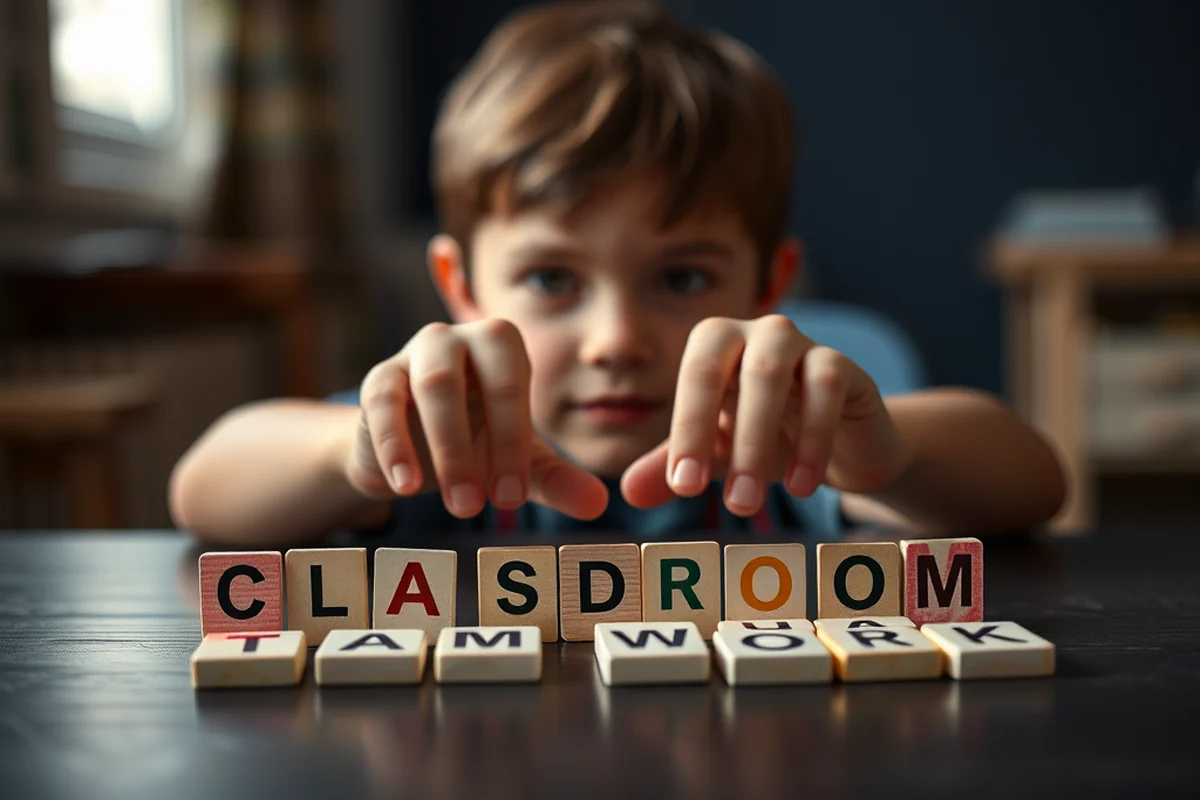
I’ve discovered that the cheapest classroom teamwork games are often the most effective. When I first tried 'Blindfolded Obstacle Course,' using a blindfold, a few cones, and a jump rope, the students were amazed that we could create such an engaging activity with so little. It made them feel like they were inventing something new, which boosted their motivation to participate.
I’ve also noticed that when students are working with items they’re familiar with — like straws, paper clips, or even pencils — they’re more likely to experiment and take risks. In one session, I had students use only paper and tape to build a bridge strong enough to support a small book. The fact that they had to use everyday materials made the challenge more tangible and relatable.
Using low-cost materials also helps teachers save money, especially when working with large groups. I’ve used paper plates and markers to create a 'Human Chain' activity where students had to form a line without touching the floor. It’s a simple setup, but the results are always surprising and fun.
Low-cost materials make teamwork games more accessible and creative.
Related: Affordable Classroom Teamwork Games
Related: Top Classroom Teamwork Games
Adapting Games for Different Ages
I’ve found that adapting teamwork games for different age groups requires only a few changes. For younger kids, I simplify the instructions and focus on games that involve movement and basic cooperation. For example, 'Pass the Ball Without Touching It' works well with children as young as 3, where students pass a ball around a circle using only their hands, without touching the ball directly. It’s a game that’s easy to explain and keeps young children engaged.
With older students, I can incorporate more complex challenges, like 'Mystery Box,' where each group is given a sealed box with a hidden object and must describe the object to their teammates without touching or speaking. This game works especially well with middle and high school students, as it challenges their communication and deductive reasoning skills.
I’ve also noticed that older students often enjoy games that involve some level of strategy or planning. For example, 'Design a City' is a great activity for older students, where they work in groups to create a miniature city using paper, markers, and other basic supplies. It’s a fun way to teach collaboration and critical thinking.
Tailor the difficulty of the game to the age group. For younger students, focus on simple rules and physical activities. For older students, introduce more complex problem-solving tasks.
“I remember the first time I tried to get a group of fifth graders to work together on a science project.”— Teaching Teamwork to Students editors
The Importance of a Time Limit

I’ve found that adding a time limit to a teamwork game makes it more exciting and more effective. In my experience, students are more focused when they know they have a limited amount of time to complete a task. For example, in a game called 'Build the Tallest Tower in 10 Minutes,' students use only paper and tape to construct a structure. The time limit pushes them to work quickly and efficiently, and it often leads to some amazing designs.[2]
I’ve also noticed that time limits help students learn to prioritize tasks and communicate more clearly. When I used this method with a group of high school students, the results were impressive — they had to decide who would cut the paper, who would tape the pieces together. Who would oversee the structure. It created a natural division of labor and taught them the importance of leadership and teamwork.
Time limits also help keep the game moving forward. In one session, I had a group of middle schoolers working on a puzzle with a time limit of 15 minutes. Some groups finished the puzzle quickly, while others struggled to complete it in time. The experience was valuable for all of them, as it taught them the importance of working together under pressure.[3]
Including All Students in Teamwork Games
One of the biggest challenges I’ve faced with teamwork games is making sure that every student participates equally. In the past, I’ve noticed that some students take the lead, while others watch from the sidelines. To address this, I’ve started using games that require all students to have a specific role, like 'Human Knot,' where each student has to hold hands with two others and the group must work together to untangle the knot.
I’ve also found that assigning roles within a group helps keep everyone engaged. For example, in a game called 'Build the Tallest Tower in 10 Minutes,' I’ve assigned roles like 'Materials Manager,' 'Design Engineer,' and 'Timekeeper.' This method ensures that every student has a responsibility and feels valued.[4]
I’ve also used a 'Rotation System' in some of my teamwork games. This involves rotating roles every few minutes, so that each student gets a chance to lead and contribute. This system helps prevent some students from dominating the activity and ensures that everyone has a voice.
Using Teamwork Games to Build Trust
I’ve found that some of the most effective teamwork games are the ones that require students to be vulnerable. For example, in a game called 'Trust Walk,' one student is blindfolded and must walk through a maze while being guided by their partner. This game requires a high level of trust and communication, and it always ends with students feeling more connected to their peers.
Another game that I’ve used to build trust is 'Two Truths and a Lie.' In this game, each student shares two true facts and one lie about themselves. The group has to guess which one is the lie. This activity helps students learn more about each other and fosters a sense of empathy and understanding.
I’ve also noticed that games that involve physical contact, like 'Human Knot' or 'Blindfolded Obstacle Course,' can be especially effective in building trust. These games require students to rely on each other and often lead to some of the most memorable moments in a classroom setting.
Trust is built through shared experiences and mutual support.
The Long-Term Benefits of Teamwork Games
One of the most surprising things I’ve discovered about teamwork games is that the skills students learn in these activities often carry over into other areas of their lives. In my experience, students who participate in regular teamwork games are better at working with others, both in school and in their personal lives.
I’ve noticed that students who regularly participate in teamwork games are more confident and more willing to take on leadership roles. They also tend to be better listeners and more patient with their peers. These are skills that are difficult to teach in a traditional classroom setting, but they can be developed naturally through teamwork games.
I’ve also found that the benefits of teamwork games are long-lasting. Even years after leaving my classroom, some of my former students have told me that they still use the skills they learned in these activities. Whether it’s in college, in the workplace, or in their personal relationships, the lessons from teamwork games continue to shape their lives.
🧸 Younger Kids Version
Tailored for children aged 3-6, these games use simple rules and involve a lot of movement and physical interaction.
👦 Older Kids Version
Designed for middle and high school students, these activities focus on problem-solving and strategic thinking.
⏱️ No-Prep Version
These games require no preparation and can be played with only a few common classroom items.
👥 Group Version
These activities are designed for large groups and encourage collaboration across multiple teams.
🔁 Extension Version
These games can be extended with additional challenges or used as a follow-up to other teamwork activities.
| The mistake | Why it happens | The fix |
|---|---|---|
| Not setting clear rules for the game. | Without clear rules, students may become confused or frustrated, leading to a chaotic or unproductive activity. | Always take a moment to explain the rules and demonstrate the game before starting. |
| Not adapting the game to the students’ abilities. | If the game is too difficult or too easy, it may not be effective or engaging for the students. | Modify the rules or materials to make the game suitable for the group’s skill level. |
| Not allowing enough time for the activity. | If the activity is rushed, students may not have enough time to fully engage or complete the task. | Allow enough time for the activity, and be prepared to adjust the time limit if needed. |
| Not encouraging participation from all students. | If some students are left out, the activity may not be as effective or inclusive as it could be. | Assign roles or use a rotation system to ensure that all students have a chance to participate. |
Cheap Classroom Teamwork Games
Common Questions
What if I don’t have any special materials for the games?
How long do these games usually take to play?
Can these games be adapted for students with special needs?
Are these games suitable for all age groups?
References
- Content Spotlight: International Games Day | American English (americanenglish.state.gov)
- Field Day Learning Games (fielddaylab.wisc.edu)
- Effectiveness of Play as a Teaching Strategy in the Early Grades | IES (ies.ed.gov)
- Games - U.S. Mint Coin Classroom (kids.usmint.gov)
Cite this guide
Teaching Teamwork to Students (2026). Cheap Classroom Teamwork Games. https://teamworkunit.com/cheap-classroom-teamwork-games/
Feel free to cite or share this guide.